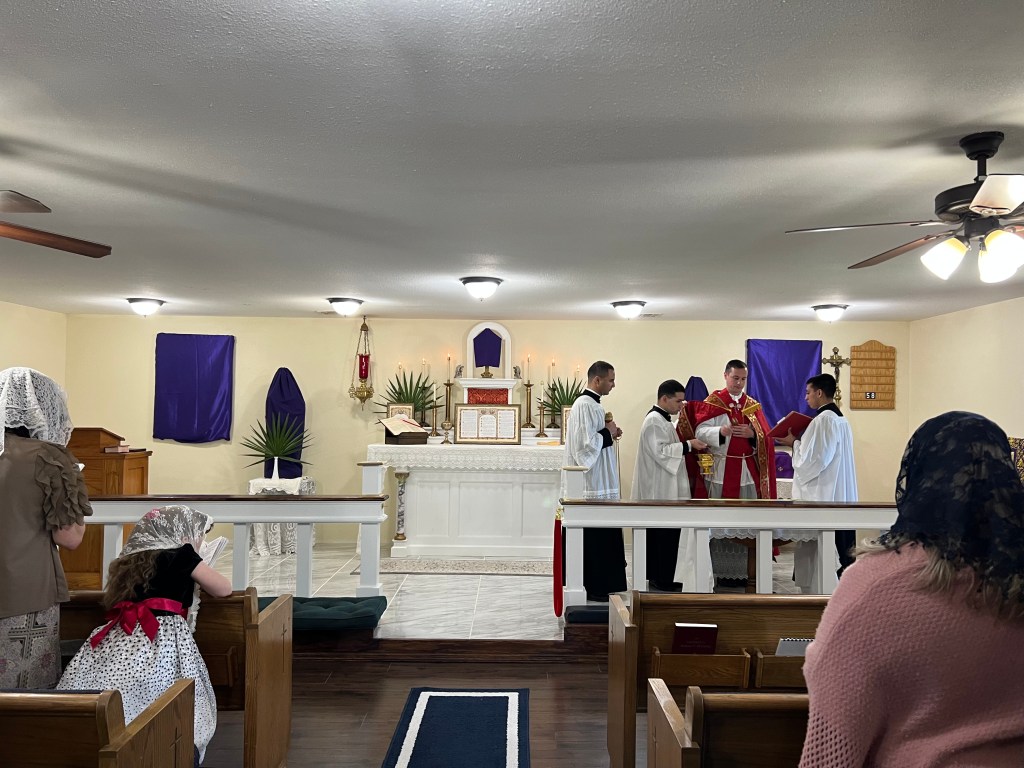
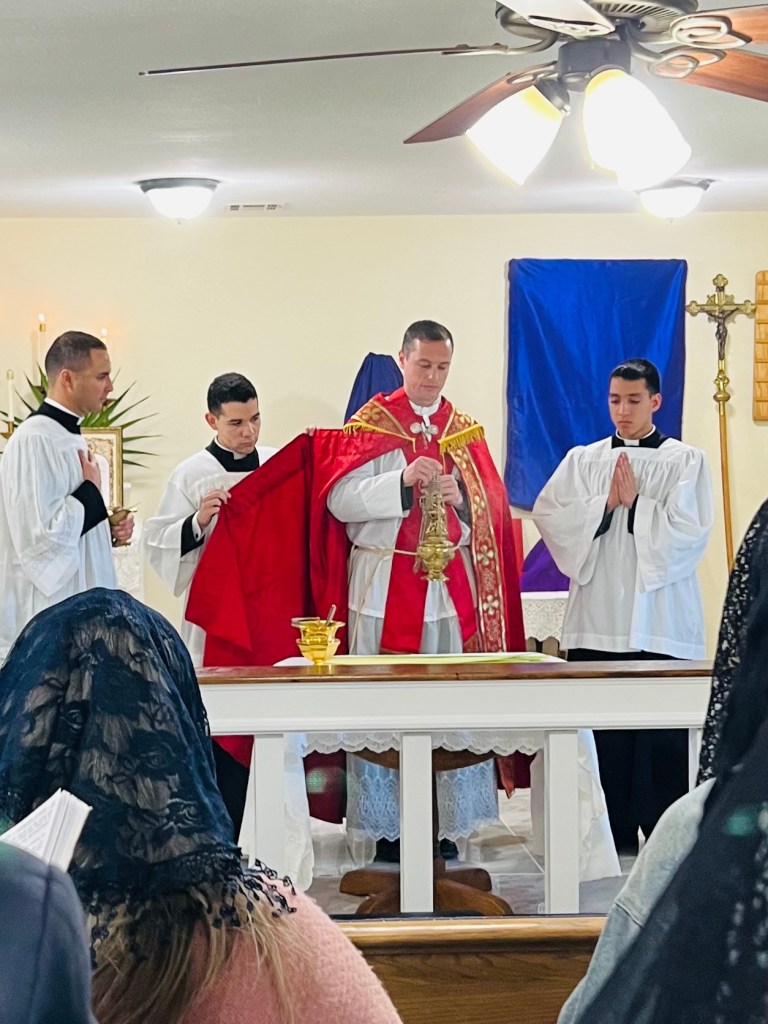
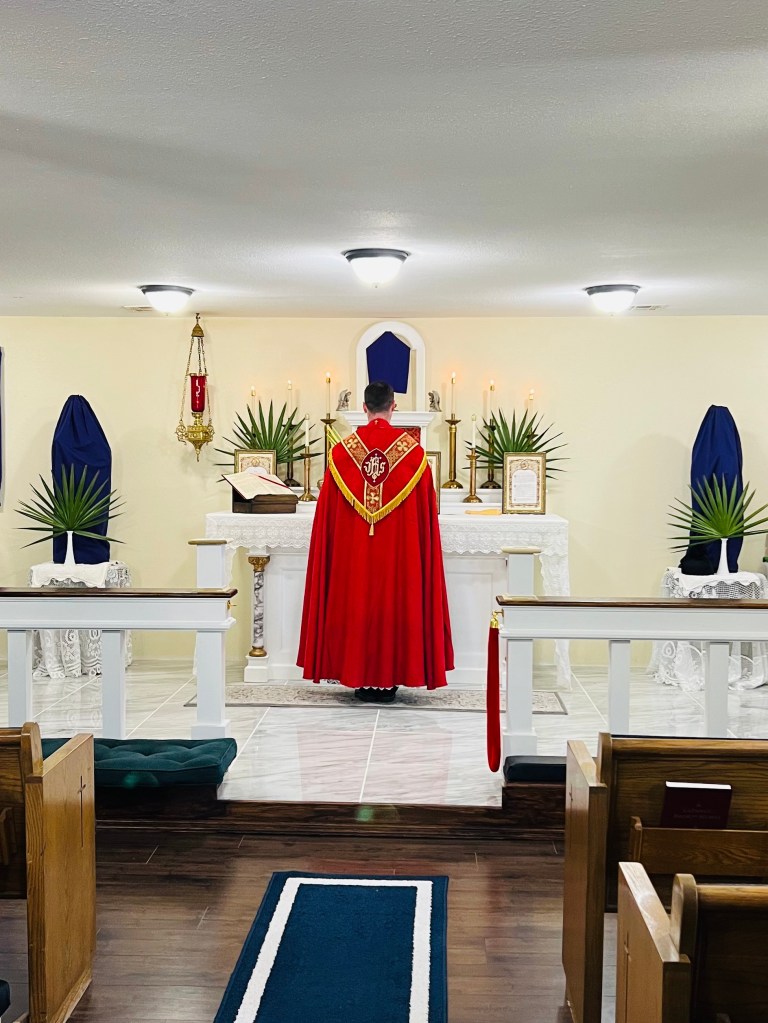
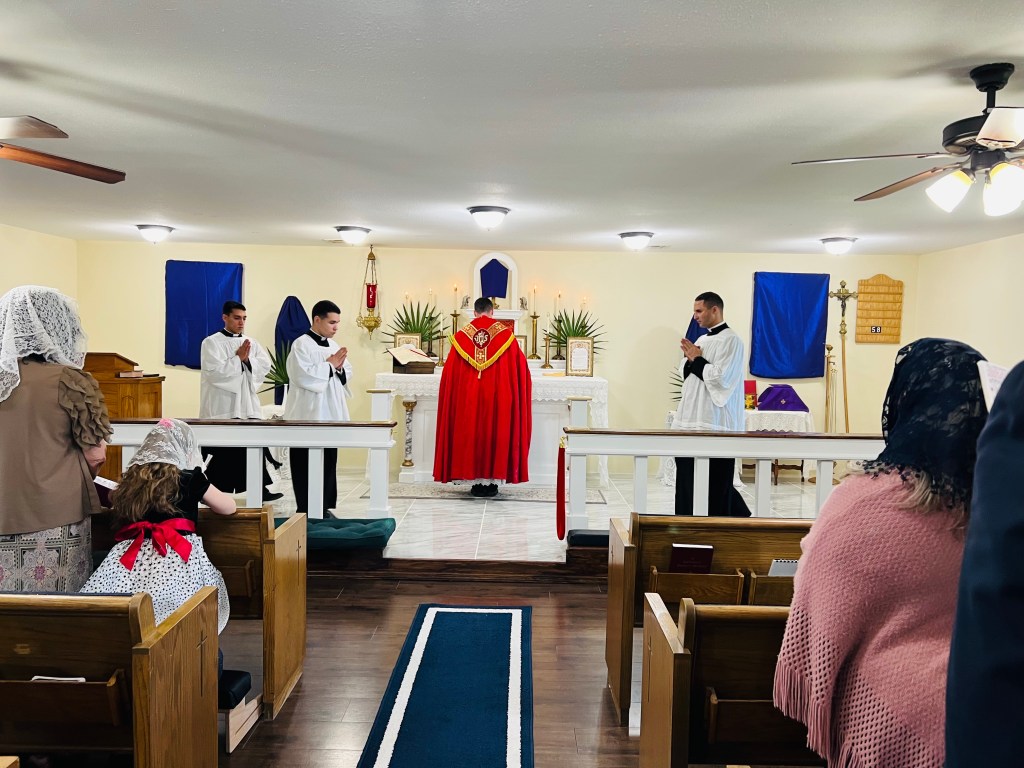
Tuesday is a Holy Day of Obligation for Mary’s Assumption

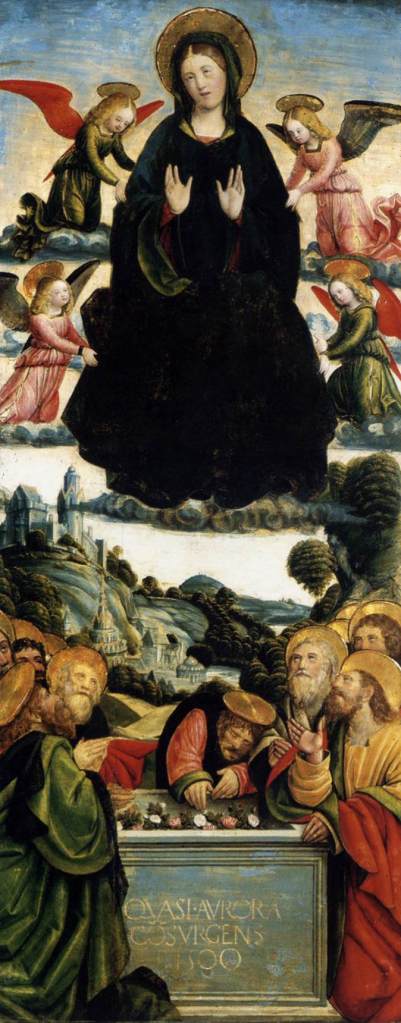
Immediately after death, Mary was assumed, soul and body, into heaven. This is the ancient belief of the Church, as the feast of the Assumption, one of the oldest feasts of Mary, proves. Her blessedness surpasses the blessedness of the angels and saints of heaven, because the measure of her soul was so great that she was worthy to carry God beneath her heart.

Josef Cardinal Mindszenty, The Face of the Heavenly Mother
O God, Who didst deign to choose for Thy dwelling the virginal womb of the blessed Mary, grant, we beseech Thee, that, defended by her protection, we may assist with joy at her festival. Who livest and reignest with God the Father in the unity of the Holy Ghost, one God, world without end. Amen.

Blessed art thou, O Virgin Mary, who didst bear the Creator of all things: thou didst bring forth Him Who made thee, and remainest forever a virgin.

May our offerings be commended to Thy mercy, O Lord, by the prayer of the Mother of God, whom Thou hast removed from this world that she may with confidence intercede for us with Thee. Through the same our Lord Jesus Christ, Thy Son, who liveth and reigneth with Thee in the unity of the Holy Ghost, one God, world without end. Amen.

Grant Thine assistance, O merciful God, to our frailty, that we, who anticipate the festival of God’s holy Mother, may, by the aid of her intercession, rise from our iniquity. Through the same our Lord Jesus Christ, Thy Son, who liveth and reigneth with Thee in the unity of the Holy Ghost, one God, world without end. Amen.

Consider first, in the festival of this day, and contemplate in spirit the glorious entry of the blessed virgin Mary, the mother of our God and Saviour Jesus Christ, into the everlasting kingdom of her Son. See, my soul, with what joy of the whole court of heaven, with what triumphs, with what heavenly hymns, she was escorted thither by legions of angels; see how all the citizens of heaven went forth to meet her: with what affectionate embraces she was welcomed by her divine Son, and presented by him to his eternal father: see how she was placed above all the angels and saints, above all the cherubim and seraphim on a most glorious throne, the highest in heaven next to that of her Son; and crowned by him with a diadem of such supereminent brightness and glory as is not to be expressed nor conceived. Rejoice, O my soul, in this glorious assumption of the mother of our Lord, who as he has been pleased to make us his brethren, has been pleased to make her also our mother. O what a happiness it is for us to have such a mother, (who has so great interest with the king of heaven, and who takes our welfare so much to heart,) so near the throne of all mercy and grace! O blessed Virgin, graciously look down upon us in this our banishment, and always show thyself a mother to us.

Consider 2ndly, what brought this ever-blessed Virgin to this supereminent glory, which we honour in this festival of her assumption? 1. It was her most profound humility – she was exalted above all because she was the most humble of all. For he that humbleth himself the most upon earth shall be the most exalted in heaven. 2. It was her perfect purity of soul and body, mind and heart, from all the defilements of sin. 3. It was principally her supereminent love of God; for the degree of the enjoyment of God in his eternal glory is ever proportioned to the degree of our love of God in this mortal life. If then we hope one day to follow this blessed Virgin to heaven, and to have a share in the glory of her assumption, we must endeavour to imitate her humility, her purity, and her love of God. No soul can ever ascent to heaven by any other way than that of humility, purity, and the love of God.

Consider 3rdly, that this imitation of the virtues of the blessed Virgin is an excellent way of honouring her, and of showing our real esteem, love, and devotion to her. For how can we better testify our affection and veneration for the saints of God than by honouring and loving in them that which made them saints; and that which God himself honours and loves in them, that is their virtues? Or how can we better express our esteem and love for their virtues than by studying to imitate them? This kind of devotion is most pleasing to the saints, and to the queen of the saints, and to the God of the saints; it is most honourable to them and most profitable to ourselves. This will bring us effectually to the eternal society of the saints; which without this no other devotion can secure to us.

Conclude so to rejoice in the exaltation of our blessed Lady, in this day of her glory, and to take up on this day a generous resolution of walking in her footsteps, by a diligent imitation of her life; but more especially by following the great example of her humility, purity, and love of God. This generous resolution of thine will be so agreeable to her as to add a new satisfaction and joy to the immense felicity she possessed before.
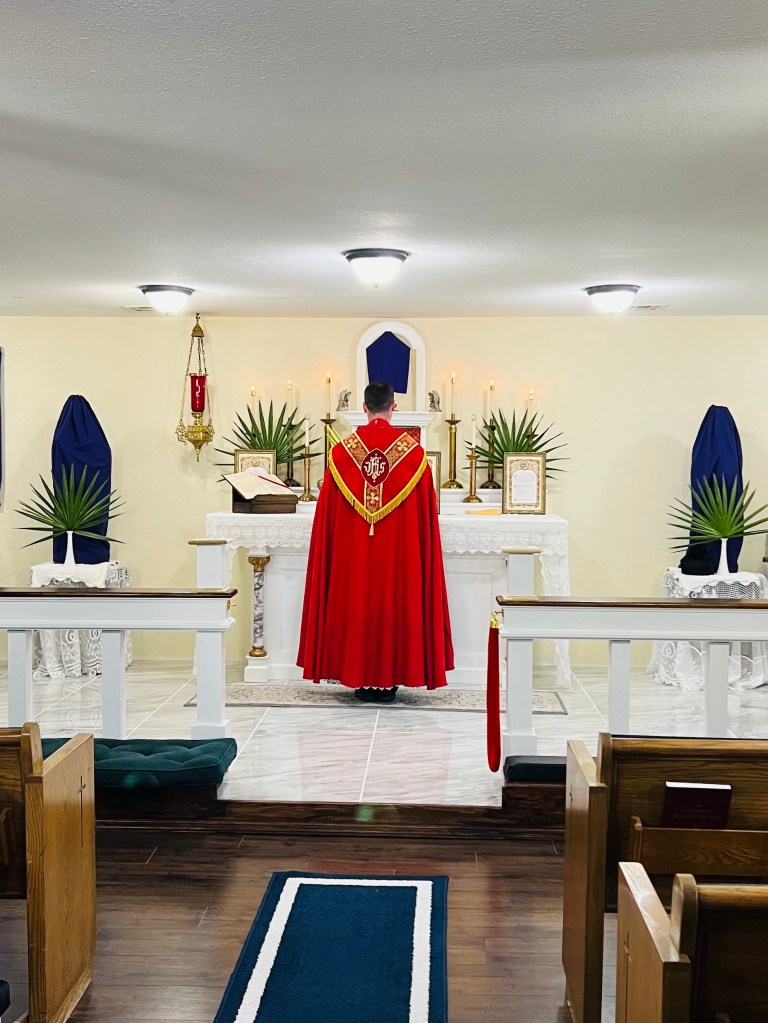
How to Gain the Indulgences for the Holy Souls

Explained in a helpful letter and attached file from Fr. Gabriel Lavery, CMRI, to his parishioners:

Nov. 1, 2022

Dear Faithful,

As mentioned in the announcements last Sunday I’m sending by email the information on the various indulgences which can be gained only for the Holy Souls in Purgatory during All Souls Day and the following octave. I’ve also attached a chapter from Fr. Winfrid Herbst’s book on Indulgences in which he goes into more detail about the All Souls Day indulgences and answers some practical questions.

One thing to note is the requirement of separate visits to the church for each separate plenary indulgence one wishes to gain (this is true not only on All Souls Day but for all indulgences that require a visit). The Sacred Congregation of Indulgences was asked (February 29, 1864) whether or not it is necessary to make as many visits as the number of indulgences one wishes to gain (“totidem vicibus, quot sunt indulgentiae lucrifaciendae”). It replied in the affirmative and furthermore decreed that one must “exit the church after each visit and again enter into it” in order to gain each indulgence for which a visit is required. So to gain several of the “toties quoties” plenary indulgences for the Holy Souls during one visit to the church one must exit and return each time the prayers are said.

One might wonder why the Church would require such a “technicality” to gain an indulgence when the end result is the same prayers are said and the same amount of time is spent in church. While the decree does not give a reason for this requirement I think we can surmise the reason has something to do with the general mind of the Church in regard to gaining indulgences. When granting an indulgence the Church is dispensing from the “treasury of the Church,” i.e. the infinite merits gained by Christ by His life and death on the cross together with those of the Blessed Virgin Mary (which she did not need for herself as she was sinless) and the superabundant merits of the other saints who did more satisfactory works and prayers than needed to atone for their own faults and sins. This treasury is unlimited and it is a great mercy that we are able to draw from it to fulfill the debt of satisfaction for our own sins which might otherwise require severe penance (remember even venial sin is the worst evil in the world!). It is almost incredible that we are able by such simple and easy indulgenced prayers gain far more than we could with the Church granting such indulgences. Yet, while the Church is exceedingly generous in dispensing these treasures she still wishes us not to take them for granted and forget what a treasure they are. So the Church requires that there at least be some effort on our part, some conditions which put us to some trouble to fulfill. Otherwise we would be like spoiled children whose parents always gave them everything they asked no matter how bad or good, grateful or ungrateful they were. Christ Himself said if anyone would come after Him he must pick up his cross and follow him. I believe I read somewhere that St. Robert Bellarmine was so keenly aware of how generous the Church was in gaining indulgences and just how comparatively little we are asked to do to gain them that he preferred to gain the indulgences that were harder to gain with more conditions and effort required on his part. He felt in this way he would appreciate more the favor the Church was granting him. So, I think perhaps this is the mind of the Church in requiring that little extra effort to exit the church and return for each visit. Besides, human nature being what it is, if we simply stayed in church endlessly repeating the same set of prayers to gain multiple indulgences we would very easily turn into a robot saying them mindlessly. The interruption caused by each separate visit at least provides a means for us to refocus our thoughts.

Let us remember all our loved ones and friends and all the rest of the Holy Souls in Purgatory this month and gain for them the indulgences we can. They won’t forget us when they get to heaven sooner due to our prayers.

For the Holy Souls indulgence information please see below my signature in this email as well as the attached file by Fr. Herbst.

In Jesus and Mary,

Fr. Gabriel M.

Indulgences for the Month of November:

1)      The faithful who recite prayers or perform other devout exercises in supplication for the faithful departed during the month of November, may gain: An indulgence of 3 years once on each day of the month; A plenary indulgence on the usual conditions, if they perform these devotions daily for the entire month. (Raccolta, 589)

2)      Those who, during the aforesaid month, take part in public services held in a church or public oratory in intercession for the faithful departed may gain: An indulgence of 7 years on each day of the month; A plenary indulgence, if they attend these exercises on at least fifteen days and, in addition, go to confession, receive Holy Communion and pray for the intentions of the Church. (Raccolta, 589)

3)      From noon on All Saints Day to midnight of All Souls Day: The faithful, as often as they visit a church or public oratory in order to pray for the dead, may gain a plenary indulgence applicable only to the souls in purgatory, on condition of confession and Communion, and the recitation six times during each visit of Our Father, Hail Mary and Glory be for the intentions of the Church. (This indulgence may also be gained on the following Sunday, but only by those who did not gain it on Nov. 1st or 2nd.) (Raccolta, 590) [N.B. – When All Souls’ Day falls on November 3rd, the indulgence may only be gained from noon on November 2nd (Sunday) to midnight of November 3rd.]

4)      The faithful who during the period of eight days from All Souls Day (counting All Souls Day itself) visit a cemetery in a spirit of piety and devotion, and pray, even mentally, for the dead may gain a plenary indulgence on the usual conditions, on each day of the Octave, applicable only to the dead. (Raccolta, 592)

N.B. Whenever a plenary indulgence says it is granted under the “usual conditions” that means the following must be done in order to gain the indulgence:

“The usual conditions for gaining a plenary indulgence are: confession; Communion; visit to a church or public oratory (or semi-public oratory for those who have the right to use it, if no church or public oratory is attached, provided nothing special is prescribed); prayer for the Pope’s intentions. It is to be noted that the usual conditions are not always prescribed, e.g., none of them are really prescribed for gaining the indulgence of the Way of the Cross.” (Winfrid Herbst, S.D.S. The Church Suffering. Emphasis added.)

The confession can be made on the day in question or anytime during the week before or after. Holy Communion can be made on the day in question or within the following week or one day before the day in question.

The faithful who are in the habit of confessing at least twice a month unless legitimately impeded, or who receive Holy Communion daily in the state of grace and with a good and holy intention, though they may abstain from receiving once or twice a week, can gain all indulgences without actual confession for which otherwise confession would be a necessary condition. (Canon 931)

What are prayers for the intentions of the Pope?

When prayers “for the intentions of the Pope” are required one Our Father, Hail Mary and Glory Be are sufficient unless otherwise stated in the grant of the indulgence. These must be said externally by moving the lips but need not be said audibly.

The Toties Quoties indulgence on All Souls’ Day specifically requires six Our Father’s, Hail Mary’s and Glory Be’s during each visit in church. These six are to be said for the intentions of the Pope. They are not said for the Poor Souls but with the intention of gaining the plenary indulgence for them. The visit is made to pray for the Poor Souls and gain the plenary indulgence for them.

How does one pray “for the intentions of the Pope” during a vacancy?

During a vacancy of the Holy See, one can still gain a plenary indulgence by praying for the general intentions that every pope has. We sometimes refer to these as the “intentions of the Church” to avoid confusion during this time of vacancy. As explained by a notable canon lawyer before Vatican II:

“The intentions of the Supreme Pontiff for which one is to pray are: the exaltation of the Church, propagation of the faith, ending of heresy and schism, conversion of sinners, peace and harmony among Christian rulers and nations, and other blessings for the welfare of Christianity. It suffices to have the general intention to pray for the intentions of the Pope or the Church.” (Stanislaus Woywod, A Practical Commentary on the Code of Canon Law, p. 538. 1957)

Full of All Divine Sweetness is the Name of Mary

But I do not here speak of this sensible sweetness, since it is not commonly granted to all, but I speak of the salutary sweetness of consolation, love, joy, confidence, and strength, which the Name of Mary universally gives to those who, with devotion, pronounce it. Speaking on this subject, Francone the Abbot says, that next to the holy Name of Jesus, the Name of Mary is so rich in blessings, that no other name is uttered on earth or in heaven from which devout souls receive so much grace, hope, and sweetness . For the Name of Mary, he goes on to say, contains in itself something admirable, sweet, and divine, which, when it meets a friendly heart, breathes into it an odor of holy sweetness. And the wonder of this great Name is, he concludes, that if heard a thousand times by the lovers of Mary, it is always heard as new, the sweetness they experience in hearing it spoken being always the same. ~ St. Alphonsus Liguori, The Glories of Mary

Honoring the Birth of Mary

Feast of the Nativity of the Blessed Virgin Mary
by Rev. Fr. Leonard Goffine, 1871

Why does the Church celebrate this festival?

Maria Bambina

Because the day of the blessed Virgin’s birth, which was so holy and immaculate, is one of universal joy to the whole world.

Why then does Mary’s birth cause such great joy?

To this the Church answers beautifully with the Antiphon of the Magnificat, which says: “O Virgin, Mother of God, Thy birth has announced joy to the whole world, for from Thee, has proceeded the Sun of justice, Christ our Lord, who, by taking away the curse, has shed benediction and, who by confounding death, has given us everlasting life.” This curse, caused by our first parents’ sin in paradise, burdened the whole earth and especially mankind, for “sin, having come into the world by one man, it passed upon all, since all have sinned in this one.”

It was in consequence to original sin, that mankind was covered with such a darkness, that led men to ignore their Creator, whilst they on the other hand prostrated themselves to creatures and adored idols of their own construction.

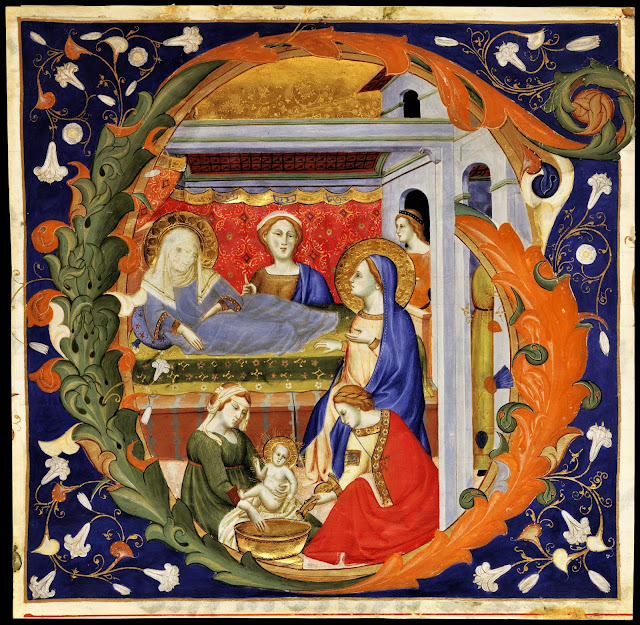
Don Silvestro de’Gherarducci, Birth of the Virgin
Italian, c.1375

Finally the hour of redemption had come. The infant was born, who was predestined by God to become the mother of the promised Savior, and who was consequently to crush the head of the serpent. How then ought this festival to spread joy through the world, since after such ardent desires salvation is at last about to appear! For Jesus, the Savior, our Lord and God, the Light of the world, the Sun of Justice, is to come forth from Mary; that darkness, which had overshadowed all nations is about to disappear, the knowledge of God shall abound, the bonds of sin, in which mankind lay fettered, shall be loosed, the curse so long resting upon creation shall be taken away,–in a word, the fulness of benediction shall reign upon earth. To-day even death is put to shame, for she is born, from whom shall come forth the Conqueror of death, who, depriving death of its sting, shall guide us unto perpetual life. Such are the glorious hopes, that Mary’s birth awakes in us, promising at the same time the speedy fulfillment of them.

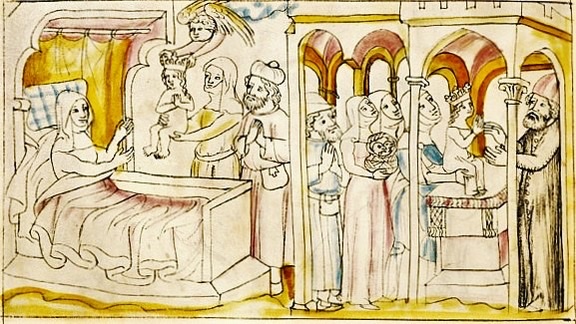
Mary’s Birth and Presentation in the Temple
From a Historien Bibel
German (Swabia), c. 1375-1400

Then, as St. Peter Damian says, let us rejoice in Mary, the most blessed Mother of God, for she bears a new message unto the world, being the beginning of man’s salvation; let us rejoice in the day, on which was born the Queen of the World, the Gate of Heaven, the Portal of Paradise, the Tent of God, the Star of the Sea and the Ladder of Heaven, upon which the Supreme King in infinite humility deigned to descend to us, and upon which we may rise from our dust to heaven. Today the most glorious Virgin is born, from whom shall proceed, as a bridegroom from his chamber, the most beautiful of the sons of man; to-day she leaves her mother’s womb, who deserves to be the temple of God.

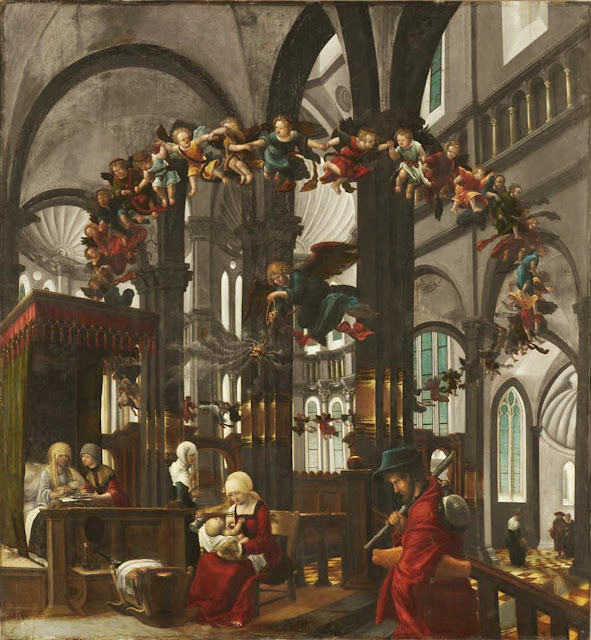
Albrecht Altdorfer, Birth of Virgin
German, 1520-1525

All images depicting the birth of Mary were found on this post at the Ad Imaginem Dei blog.