

On Friday night, Fr. Sandquist brought down six first and second-year seminarians from CMRI’s recently-acquired Iowa location to help us prepare for Candlemas and a High Mass for the Feast of the Purification, as well as lend their muscles to a chapel workday: Joe (Nebraska), Dominic (MN), Adam (MI), William (MI), Caleb (Scotland), and Frederic (France).
Saturday morning was dedicated to removing the Christmas decorations and Nativity, followed by server and choir practice. Then sheetrock projects began as the ladies boxed up the large Nativity figures. That complete, the women organized an assembly line to pull nails from salvaged oak baseboards. After the de-nailed boards were stained, seminarians whisked them off to be cut and then nailed in place while others taped so that a second coat could be applied. Fr. Sandquist took to his hands and knees to finish the staining–the baseboards and, he ruefully noted afterward, his hands. Between all the sheetrock dust, the blue tape, and everything being pulled away from the walls, including the altar, it looked like we couldn’t possibly be ready for mass on Sunday, but of course it all came back together with many hands making light work.
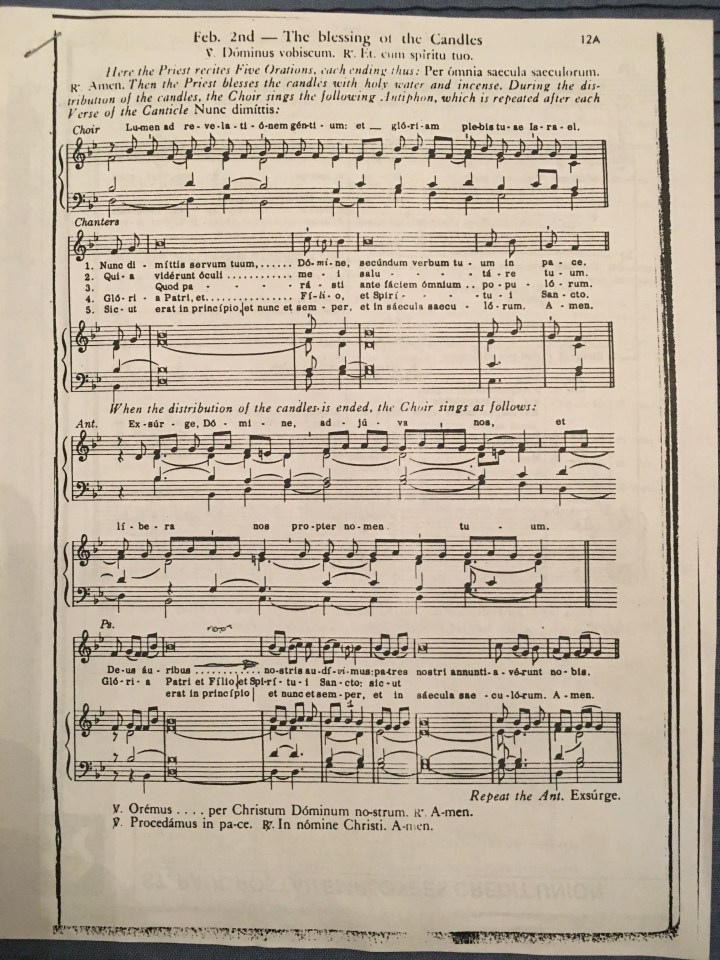
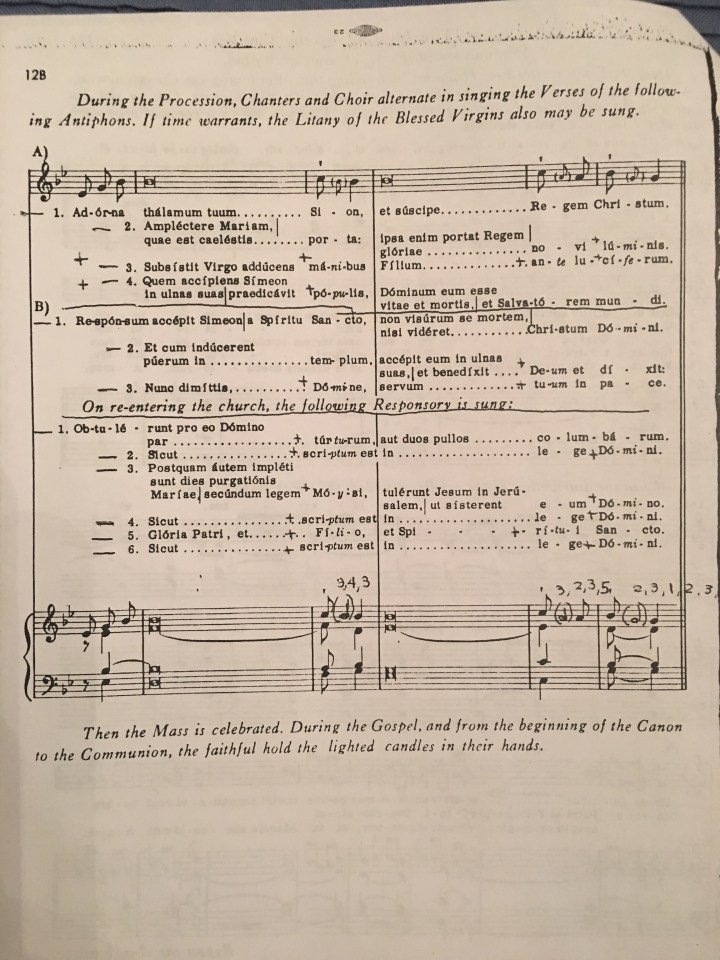
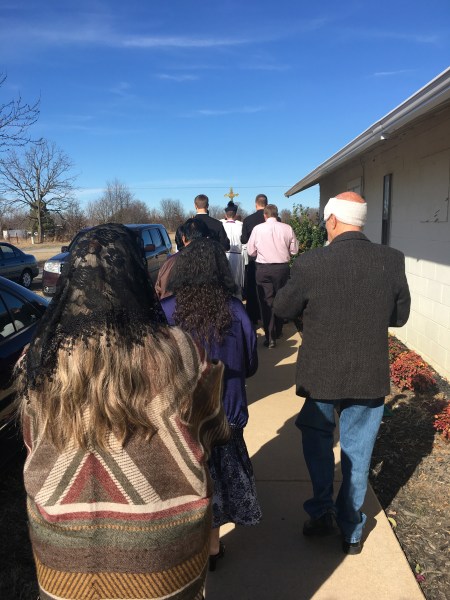
Sunday’s Candlemas ceremony and high mass were simply glorious. We couldn’t have asked for a more gorgeous day for our procession either. It was 69 degrees with sunny, blue skies. The seminarians were thrilled with the fantastic weather after enduring a tough winter in Iowa. All the practice paid off, and everything went smoothly. The choir finished with a stunning Stella Matutina. Afterward Adam asked if it was too loud, and I assured him that it was exquisite, and the volume was perfect. Truly, we congregants zoomed heavenward in a musical chariot powered by their strong male voices, sonorous with Marian devotion.
Below is a photo gallery from the Asperges, Candlemas ceremony, and procession:


Below is a photo gallery from the Mass for the Purification, with the final two photos depicting the new location of the statues of Sts. Peter and Paul and a zoomed-in look at the altar with the newly-acquired Jesus and Mary statues.


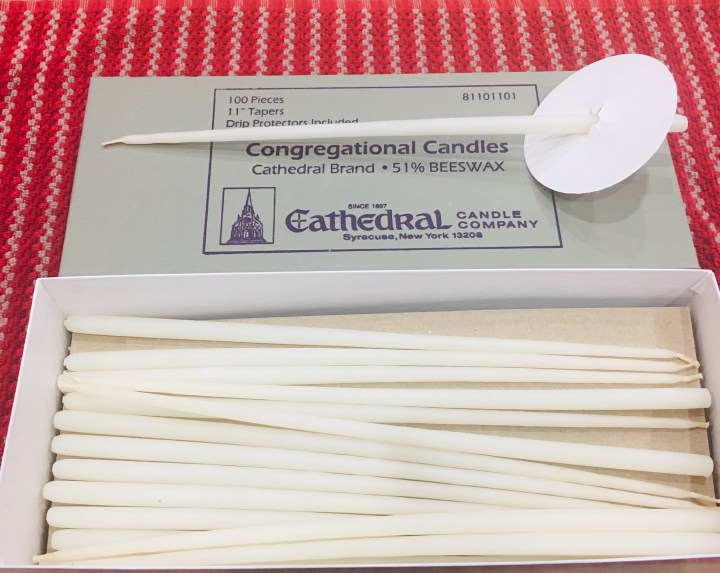 This Sunday Fr. Sandquist will do the blessing of the candles ceremony and then, with four seminarians, lead us on a procession. It is our chapel’s very first one, and so it is quite exciting!