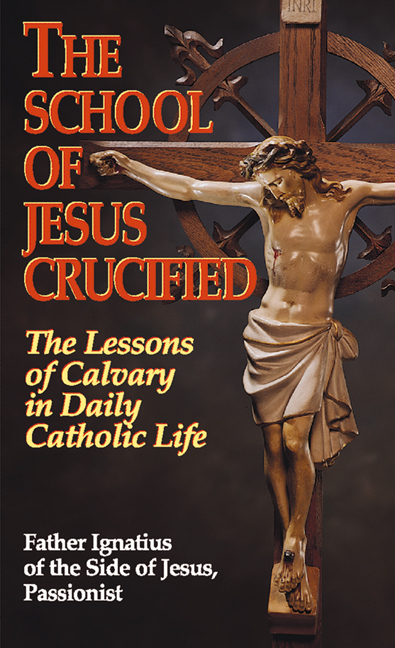
 Editor’s Note: In his book, The School of Jesus Crucified, Father Ignatius of the Side of Jesus, Passionist, outlines 25 points as a “Practical Rule of Christian Life for Daily Observance”. We will publish one a day: “Nothing can be more thoroughly in opposition to a well-regulated Christian life than late rising: for which reason never allow sloth to get the better of you, but rise early, and dress yourself diligently and modestly, remembering the presence of God. While dressing, devoutly reflect upon the sufferings which Jesus Christ endured in His most sacred Body to save you from the torments of Hell. Offer your heart to Jesus Crucified, and promise to spend the day granted you by His goodness in loving and serving Him, and in reflecting, as often as possible, upon His bitter Passion. Remember that the day you are now entering upon may be your last, and let your mind be deeply impressed with this truth. Thus, death will never find you unprepared, and you will pass each day in a manner worthy of a Christian.”
A Practical Rule of Christian Life for Daily Observance, Point 1
In his book, The School of Jesus Crucified, Father Ignatius of the Side of Jesus, Passionist, outlines 25 points as a “Practical Rule of Christian Life for Daily Observance”. We will publish one a day: “Nothing can be begun well unless begun in God, the sole Fountain of all real good; begin, therefore, each day by raising your mind and heart to God. On awaking in the morning, let your first thoughts be devoted to this great truth: God is here present; and make an act of lively faith in His Divine Presence. Let your first action be the Sign of the Cross, according to the custom of the early Christians; your first words the holy Names of Jesus and Mary; and the first impulse of your heart an offering of yourself to God, by saying with the deepest feelings of respect: I adore Thee, O my God; I love Thee with my whole heart; I thank Thee for all the blessings Thou hast bestowed upon me, and especially for dying for me on the Cross, shedding all Thy blood for the salvation of my soul, and preserving me in life up to the present moment; to Thee I consecrate my heart and my whole self.”
Lent Preparation: Compunction
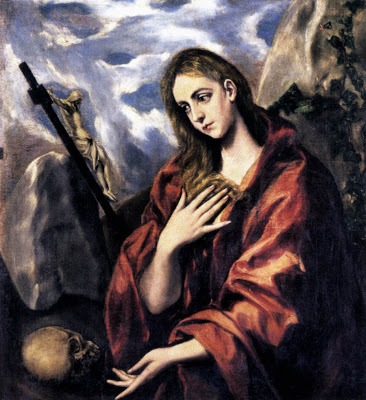
Excerpted from My Daily Bread, a book recommended by Fr. Geckle. CHRIST: My Child, how can any man abandon himself to the pleasures of this earthly life? Such people do not appreciate the miserable condition of their souls, nor the rapid passing away of this brief experience. They do not stop to think and to look beneath the surface of their daily activities. They laugh when they have many reasons to weep. Happy is he who can overcome the distractions which hinder him from straight thinking.
2. As for you, strive to develop within yourself a genuine compunction of heart. Compunction is a deep and lasting sorrow for your sins. It is not a gloomy nor depressing sorrow, but an intelligent admission of your sins and a sincere determination to do something about them. Since compunction comes from a realization of how you have failed so good a God, it brings with it a readiness to accept anything from My Hand.
3. Compunction opens the way to many blessings and precious graces. When compunction fills your soul, the world will lose its magic attraction and will become more distasteful to you. Compunction will help you realize how quickly earthly joys pass away, while eternity goes on forever. You will see clearly that your sins have offended Me. One who has genuine compunction, is honest enough to admit his sins, and is truly sorry for them. His sorrow is proved by his sincere efforts to be rid of his faults.
THINK: Compunction is a great grace by which God helps me to face the truth about my sins. It also helps me to prove my sorrow for my faults. By compunction a man begins to attack his faults and to practice the opposite virtues. I can be sure of my sincere sorrow only when I have begun to do something about my faults. Compunction is a lasting sorrow because it is not an emotion, but rather an intelligent admission of facts. It shows me my faults, God’s goodness, and my own need to change for the better. Then it helps me undertake the daily task of abandoning my faults and acquiring the opposite virtues.
PRAY: Lord, I want to live a cheerful life, but I do not want that kind of cheerfulness which refuses to admit the truth. I can admit my sins and still be cheerful, as long as I am doing my best to overcome and make up for these sins. I do not want any gift or talent which might make me proud, or worse in any way. Not everything that is high is holy; nor is every pleasant thing good. Good desires are not always unselfish. You, my Lord, are not always pleased with the things that we prize. It is far better to have compunction than to be able to talk about it. Grant me genuine compunction, so that I may hate my sins and daily fight against them. Amen.
The Relationship Between the Day of Rest and Festivity
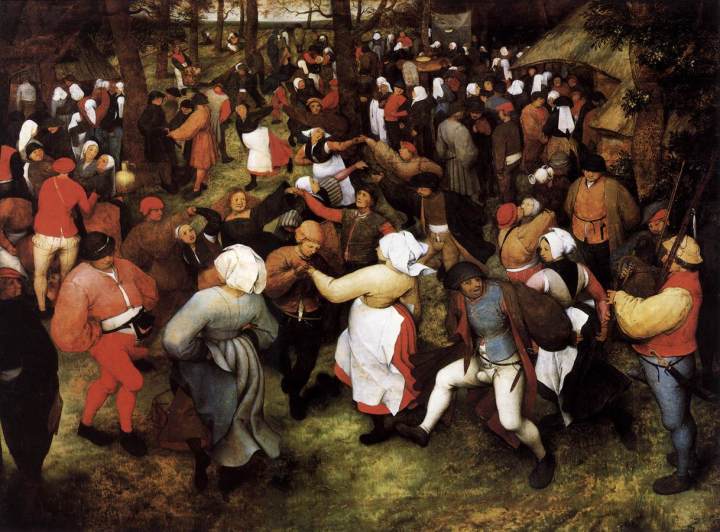 “The antithesis between holiday and workday, or more precisely, the concept of the day of rest, tells us something further about the essence of festivity. The day of rest is not just a neutral interval inserted as a link in the chain of the workaday life. It entails a loss of utilitarian profit. In voluntarily keeping the holiday, men renounce the yield of a day’s labor. This renunciation has from time immemorial been regarded as an essential element of festivity. A definite span of usable time is made, as the ancient Romans understood it, “the exclusive property of the gods.” As the animal for sacrifice was taken from the herd, so a piece of available time was expressly withdrawn from utility. The day of rest, then, meant not only that no work was done, but also that an offering was being made of the yield of labor. It is not merely that the time is not gainfully used; the offering is in the nature of a sacrifice, and therefore the diametric opposite of utility.
“It scarcely need be said that in a world governed by the concept of utility, there can be no time set aside on principle, any more than there can be land set aside on principle. Anyone who called for it would be accused of “sabotaging work.” For that very reason the totalitarian laboring society must of necessity be an altogether unfestive society, just as it is marked by scarcity and impoverishment even when there is the greatest abundance of material goods. Similarly, the man who is limited to absolutely utilitarian activity, to the artes serviles, and who is thus “proletarianized” in that sense, has rightly been called “unfestive.” On the other hand, voluntary renunciation of the yield of a working day cuts through the principle of calculating utility, and the principle of poverty also. Even in conditions of extreme material scarcity, the withholding from work, in the midst of a life normally governed by work, creates an area of free surplus.” ~ Josef Pieper, In Tune with the World: A Theory of Festivity
To Honor Christ as God, King, and Man: Fr. Goffine’s Epiphany in a Nutshell
Excerpted from The Church’s Year, by Rev. Fr. Leonard Goffine
Why is this day called Epiphania Domini, or Apparition of the Lord?
Because the Church wishes to bring before our mind the three great events in the life of Christ, when He made known to man His divinity, the coming of the wise men from the East, through whom He revealed Himself to the Gentiles as the Son of God; His baptism, on which occasion His Divinity was made known to the Jews, and His first miracle at the marriage of Cana, by which He revealed Himself to His disciples.
Why did the kings offer gold, frankincense and myrrh?
Because it was the ancient Eastern custom, never to appear without presents before a prince or king, and the three kings, as the holy Fathers universally teach, enlightened by the Holy Ghost, desired by their presents to honor Christ as God, as king, and as man, Of this the venerable Bede writes: “The first of the kings, Melchior, offered gold to Christ the Lord and king; the second, named Caspar, frankincense to the divinity of Christ; and the third, Balthasar, myrrh, by which was expressed that Christ the Son of man, must die.”
How can we bring similar offerings to Christ?
We offer gold to Him, when we love Him with our whole heart, and out of love to Him, present Him our will by perfect obedience and continual self-denial, as our will is our most precious treasure. We also offer Him gold when we assist the poor by alms given in His name. We offer Him frankincense when we devoutly and ardently pray to Him, especially when we meditate upon His omnipotence, love, goodness, justice and mercy. We offer Him myrrh when we avoid carnal desires, mortify our evil inclinations and passions, and strive for purity of body and soul.
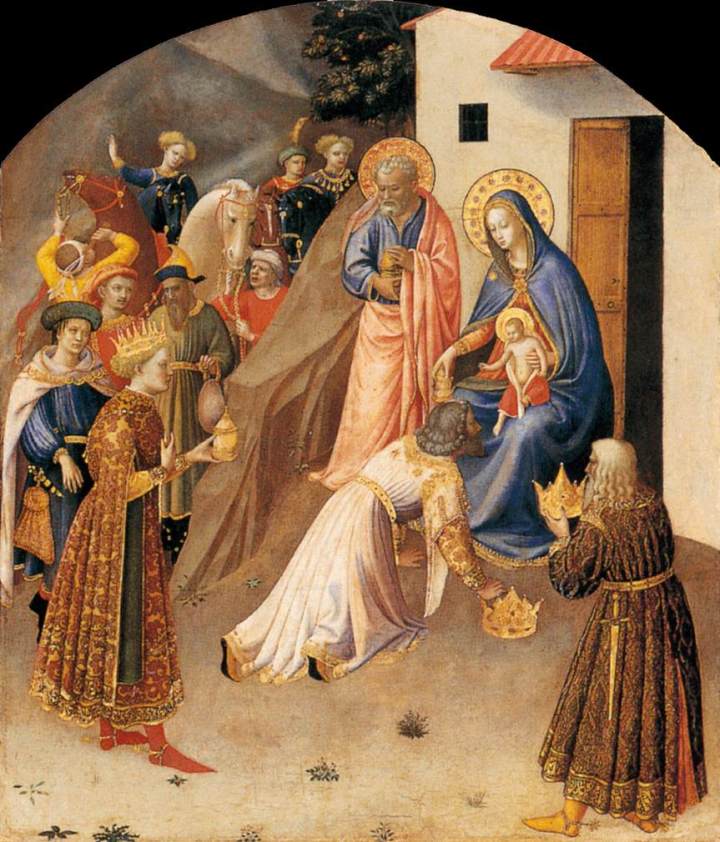
1423-24
Tempera and gold on panel, 63 x 54 cm
Abegg-Stiftung, Bern
 Our Lady of Fatima Mission Chapel